



Mundo

Hallan fémur del dinosaurio más grande del planeta: mide 2 metros, pesa media tonelada

Otros huesos del animal también fueron desenterrados. Museo Nacional de Historia Natural de París los exhibirá en los próximos años.

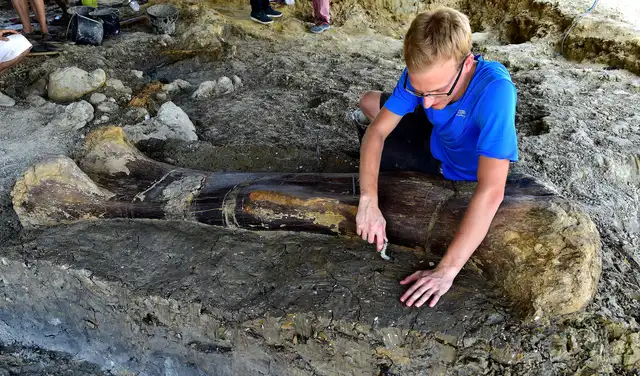
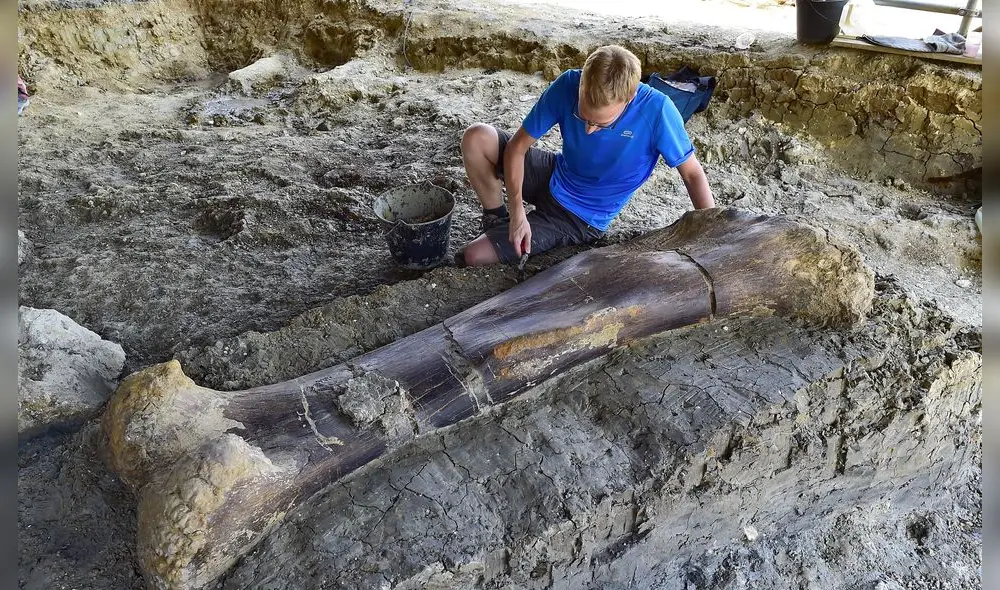
Maxime Lasseron, researching his doctorate at the National Museum of Natural History of Paris, inspects the femur of a Sauropod on July 24, 2019, after it was discovered earlier in the week during excavations at the palaeontological site of Angeac-Charente, near Ch�teauneuf-sur- Charente, south western France. - The 140 million-years-old, two meters long, 500 kilogramme femur of the Jurassic period Sauropod, the largest herbivorous dinosaur known to date, was discovered nestled in a thick layer of clay by a team of volunteer excavators from the National Museum of Natural History working at the palaeontological site. Other bones from the animal's pelvis were also unearthed. (Photo by GEORGES GOBET / AFP)

Un grupo de paleontólogos del Museo Nacional de Historia Natural de París (Francia) descubrió el fémur de un saurópodo, el dinosaurio herbívoro más grande que haya pisado la Tierra en el período Jurásico.

El fósil, descubierto la semana pasada, mide 20 metros de largo y pesa unos 500 kilogramos. Otros huesos de la pelvis del animal también fueron desenterrados.

TE RECOMENDAMOS

SANAR EL LINAJE FEMENINO: LAS HERIDAS QUE HEREDAMOS SIN DARNOS CUENTA | ASTROMOOD CON JHAN SANDOVAL

Según detalla el diario francés Le Parisien, el hallazgo se registró en una zona rural cerca de la ciudad de Cognac, en la provincia de Charente, al suroeste de Francia.

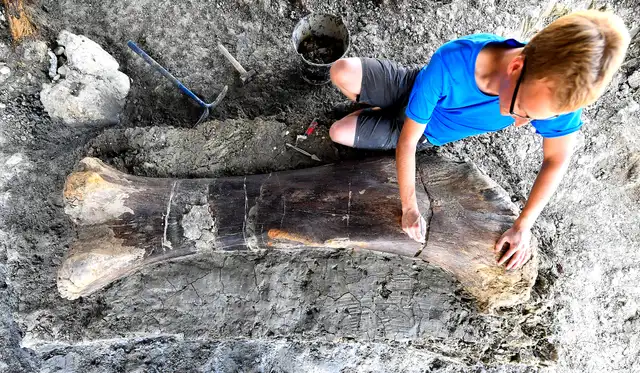
Maxime Lasseron, researching his doctorate at the National Museum of Natural History of Paris, inspects the femur of a Sauropod on July 24, 2019, after it was discovered earlier in the week during excavations at the palaeontological site of Angeac-Charente, near Ch�teauneuf-sur- Charente, south western France. - The 140 million-years-old, two meters long, 500 kilogramme femur of the Jurassic period Sauropod, the largest herbivorous dinosaur known to date, was discovered nestled in a thick layer of clay by a team of volunteer excavators from the National Museum of Natural History working at the palaeontological site. Other bones from the animal's pelvis were also unearthed. (Photo by GEORGES GOBET / AFP)

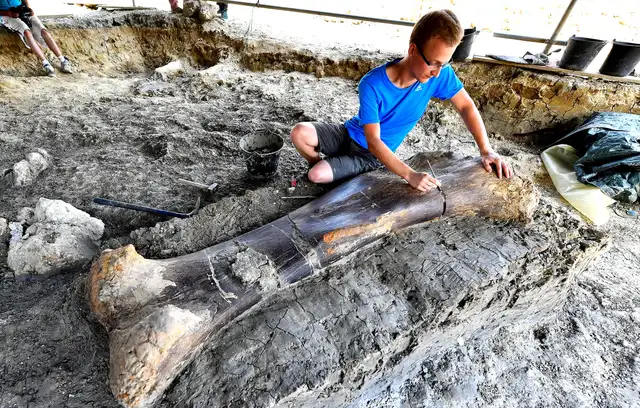
Maxime Lasseron, researching his doctorate at the National Museum of Natural History of Paris, inspects the femur of a Sauropod on July 24, 2019, after it was discovered earlier in the week during excavations at the palaeontological site of Angeac-Charente, near Ch�teauneuf-sur- Charente, south western France. - The 140 million-years-old, two meters long, 500 kilogramme femur of the Jurassic period Sauropod, the largest herbivorous dinosaur known to date, was discovered nestled in a thick layer of clay by a team of volunteer excavators from the National Museum of Natural History working at the palaeontological site. Other bones from the animal's pelvis were also unearthed. (Photo by GEORGES GOBET / AFP)

En el mismo lugar, en 2010, paleontólogos habían extraído arcilla del primer fémur y abrieron la puerta a este sitio de excavación sin igual en Europa.

El equipo, liderado por Jean-François Tournepiche, estima que esta zona habría sido pantanosa en el momento de ser habitada por estos dinosaurios, los cuales alcanzaban tamaños que podían llegar hasta los 30 metros de largo, en promedio.

“Este fémur es enorme y se encuentra en un estado de conservación excepcional. Es muy conmovedor lo que estamos presenciando. Incluso podemos ver las inserciones de músculos, tendones y cicatrices”, expresó Tournepiche.

Los saurópodos —los dinosaurios herbívoros más grandes conocidos hasta la fecha— aparecieron por primera vez a finales del Período Triásico, pero se desarrollaron en la era Jurásica.

Maxime Lasseron, researching his doctorate at the National Museum of Natural History of Paris, inspects the femur of a Sauropod on July 24, 2019, after it was discovered earlier in the week during excavations at the palaeontological site of Angeac-Charente, near Ch�teauneuf-sur- Charente, south western France. - The 140 million-years-old, two meters long, 500 kilogramme femur of the Jurassic period Sauropod, the largest herbivorous dinosaur known to date, was discovered nestled in a thick layer of clay by a team of volunteer excavators from the National Museum of Natural History working at the palaeontological site. Other bones from the animal's pelvis were also unearthed. (Photo by GEORGES GOBET / AFP)

Maxime Lasseron, researching his doctorate at the National Museum of Natural History of Paris, inspects the femur of a Sauropod on July 24, 2019, after it was discovered earlier in the week during excavations at the palaeontological site of Angeac-Charente, near Ch�teauneuf-sur- Charente, south western France. - The 140 million-years-old, two meters long, 500 kilogramme femur of the Jurassic period Sauropod, the largest herbivorous dinosaur known to date, was discovered nestled in a thick layer of clay by a team of volunteer excavators from the National Museum of Natural History working at the palaeontological site. Other bones from the animal's pelvis were also unearthed. (Photo by GEORGES GOBET / AFP)

El hueso pesa unos increíbles 500 kilos, más que un caballo moderno promedio.

En Charente, Francia, donde han sido hallados unos 7.500 huesos desde 2010, el descubrimiento ha sido calificado como un éxito.

El Museo Nacional de Historia Natural de París espera exhibir un esqueleto de este tipo en los próximos años.

Maxime Lasseron, researching his doctorate at the National Museum of Natural History of Paris, inspects the femur of a Sauropod on July 24, 2019, after it was discovered earlier in the week during excavations at the palaeontological site of Angeac-Charente, near Ch�teauneuf-sur- Charente, south western France. - The 140 million-years-old, two meters long, 500 kilogramme femur of the Jurassic period Sauropod, the largest herbivorous dinosaur known to date, was discovered nestled in a thick layer of clay by a team of volunteer excavators from the National Museum of Natural History working at the palaeontological site. Other bones from the animal's pelvis were also unearthed. (Photo by GEORGES GOBET / AFP)

Maxime Lasseron, researching his doctorate at the National Museum of Natural History of Paris, inspects the femur of a Sauropod on July 24, 2019, after it was discovered earlier in the week during excavations at the palaeontological site of Angeac-Charente, near Ch�teauneuf-sur- Charente, south western France. - The 140 million-years-old, two meters long, 500 kilogramme femur of the Jurassic period Sauropod, the largest herbivorous dinosaur known to date, was discovered nestled in a thick layer of clay by a team of volunteer excavators from the National Museum of Natural History working at the palaeontological site. Other bones from the animal's pelvis were also unearthed. (Photo by GEORGES GOBET / AFP)

El equipo de científicos, asentado en Francia, afirma que la reconstrucción está ahora completa en un 50%, pero el progreso depende de la rapidez con que los huesos restantes se puedan descubrir, identificar y agregar al esqueleto.

Lo más visto
Lo último
Los 3 países cuyos trabajadores reciben el sueldo mínimo más alto en América Latina: pagos superan los US$600 al mes
Los 3 países cuyos trabajadores reciben el sueldo mínimo más alto en América Latina: pagos superan los US$600 al mes

LEER MÁS

Recetas

Ofertas

Últimas noticias

Perú llega a las elecciones con 7 millones de trabajadores ganando menos que el sueldo mínimo

Milei denuncia una “red de espionaje ilegal” rusa en medios argentinos y promete ir “hasta las últimas consecuencias”

Irán ataca un buque vinculado a Israel en el estrecho de Ormuz mientras Trump le da plazo de 48 horas para un acuerdo

Mundo

Milei denuncia una “red de espionaje ilegal” rusa en medios argentinos y promete ir “hasta las últimas consecuencias”

Irán ataca un buque vinculado a Israel en el estrecho de Ormuz mientras Trump le da plazo de 48 horas para un acuerdo

Los 3 países cuyos trabajadores reciben el sueldo mínimo más alto en América Latina: pagos superan los US$600 al mes

Estados Unidos

Elecciones en Nueva York 2025: Zohran Mamdani gana la alcaldía y triunfo le da un fuerte golpe a la era Trump

El 11S el atentado terrorista con más víctimas de la historia: alrededor de 3.000 afectados y cuestionó la seguridad global

Estos son los 5 mejores destinos del mundo para hacer trekking: están en Estados Unidos, España y Perú

Política

A una semana de las elecciones, ninguno de los 35 candidatos tienen asegurado su pase a segunda vuelta

Marisol Pérez Tello: “Keiko dice que la mayoría los quiere en segunda vuelta, pero el 80% los desprecia”

Multa por no votar Elecciones 2026: lo que pagarás si no acudes a las urnas el 12 de abril